

Madhubani Art Tradition
Madhubani art, sometimes referred to as “Mithila art”, is a style of painting historically belonging to the Mithila regions of India and Nepal, more specifically the Terai region of Nepal and Mithila in Bihar, India. The name “Madhubani” is given to the art form because it is named after the Madhubani district, where it gained recognition.
It originated as a folk style art tradition practised primarily by women, who painted on the walls and floors of their homes. It features line drawings filled with vibrant colours, contrasts, and intricate patterns, typically depicting nature, animals, Hindu deities and rituals that symbolise good fortune. Artists also liked painting scenes from daily life and wedding ceremonies. Many Madhubani paintings leave little empty space, filling gaps with geometric patterns, floral designs, vines, and mandalas, that contribute to their distinctive eye-catching nature.
Originally, pictures were drawn with bamboo twigs, cotton-wrapped sticks and other tools found in nature. The colours were created using natural pigments found in flowers, leaves, fruits and other plants. Nowadays, artists have begun to use brushes and pens, as well as synthetic paints, with men also participating in the craft. The skill has been passed down from generation to generation, hence why modern Madhubani paintings look quite similar to older ones, retaining the traditional style and capturing similar motifs. With popular demand, the art is not limited to walls and is now commonly produced on paper and canvases for home decoration, as well as textiles for clothing.
The exact origin of the art form and how it developed is unknown. One popular story, linked to Hinduism, tells that the kingdom of Mithila was decorated with artists commissioned by the King Janaka to celebrate the marriage of his daughter, Sita, who is revered as a goddess in Hinduism, to Lord Ram. Every house and building was painted as a symbol of luck and prosperity to celebrate the joyous occasion.
Today, the art can still be seen on buildings throughout the Mithila region of Bihar, where the tradition began. The government has also renewed its efforts to conserve the art form by providing greater support to the artists and families who continue to practise and pass down the craft, as many have abandoned it due to limited livelihood opportunities and competition from mass-produced products.
At KATHAA, the storytelling shop of Action Village India, we offer a small selection of handmade Madhubani created by artisans. As always, every purchase directly supports rural communities and helps preserve these craft traditions, which continue to face pressure from mass production despite conservation efforts.
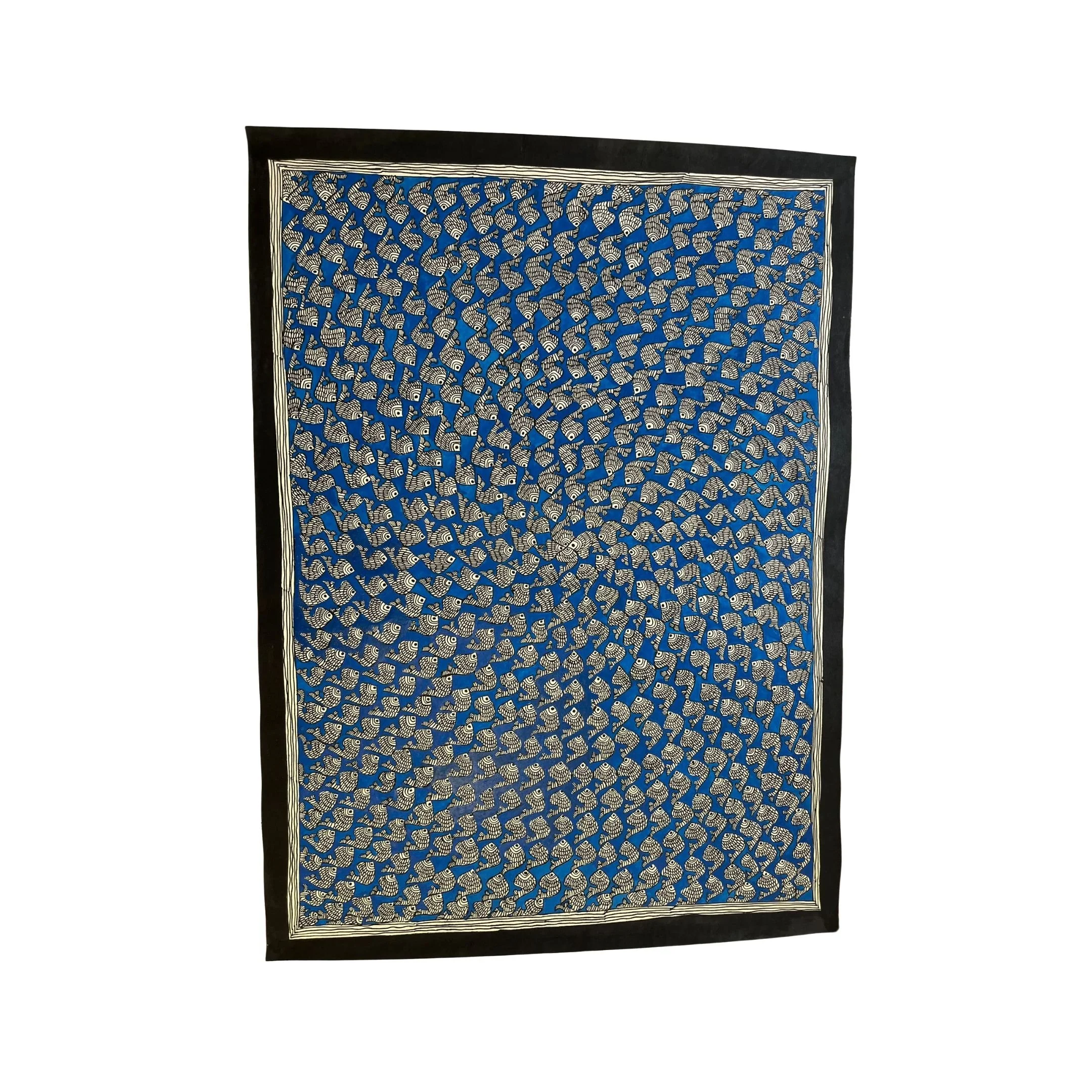
Madhubani painting holds deep cultural and spiritual significance, rooted in the traditions of the Mithila region of Bihar, India. Originally created by women on the walls of their homes during festivals, weddings and religious occasions, the art form was both a decorative practice and a sacred expression of devotion. The paintings often portray elements of nature such as the sun, moon, animals and plants, symbolising harmony between humans and the environment. Over time, Madhubani has evolved from a domestic ritual art into a powerful tool for storytelling, social commentary and empowerment, particularly for rural women artists whose work has found global audiences.
All of our Madhubani paintings are made in the traditional way by women in villages across Bihar. Using organic colours derived from plants, flowers and natural minerals, they paint on handmade canvas with brushes, twigs and even matchsticks, staying true to the age-old techniques passed down through generations. The outlines are drawn with black ink made from burnt rice soot, and the designs are filled with vibrant, flat colours and intricate patterns. These authentic works of art not only preserve a rich cultural heritage, but also support the livelihoods and creative expression of the women who continue this remarkable tradition.
Approximate Dimensions: 56cm × 77cm
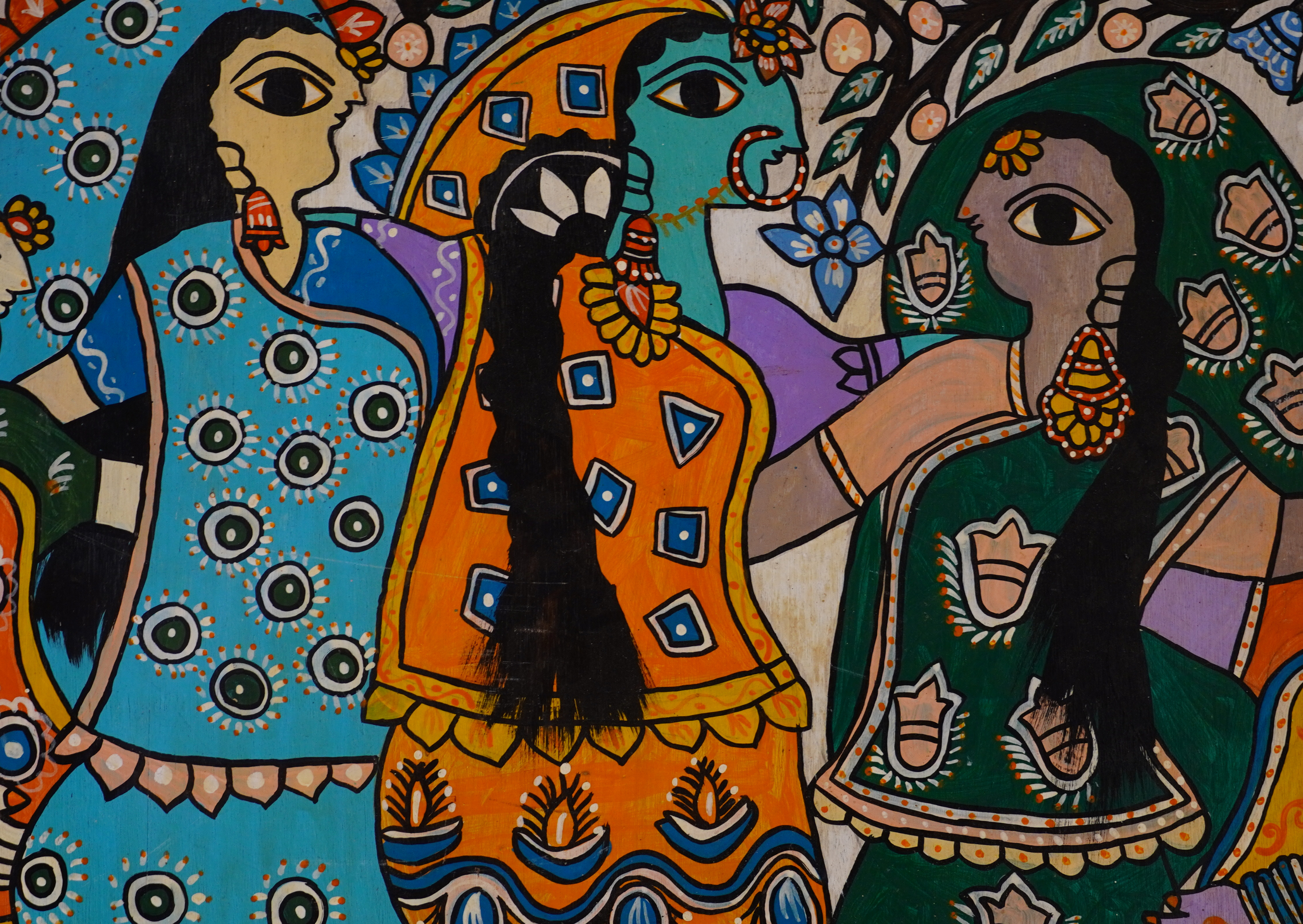
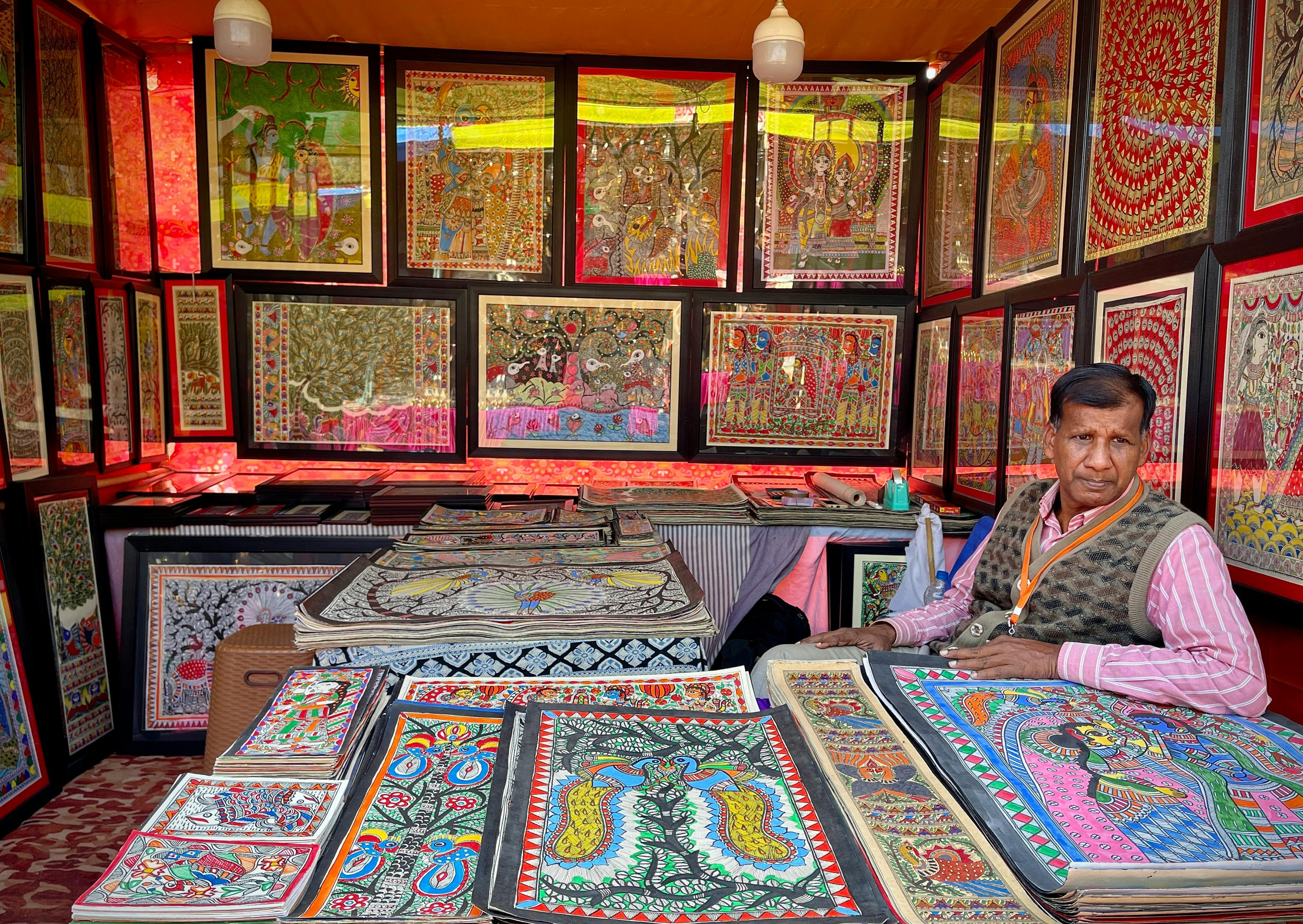

Madhubani painting holds deep cultural and spiritual significance, rooted in the traditions of the Mithila region of Bihar, India. Originally created by women on the walls of their homes during festivals, weddings and religious occasions, the art form was both a decorative practice and a sacred expression of devotion. The paintings often portray elements of nature such as the sun, moon, animals and plants, symbolising harmony between humans and the environment. Over time, Madhubani has evolved from a domestic ritual art into a powerful tool for storytelling, social commentary and empowerment, particularly for rural women artists whose work has found global audiences.
All of our Madhubani paintings are made in the traditional way by women in villages across Bihar. Using organic colours derived from plants, flowers and natural minerals, they paint on handmade canvas with brushes, twigs and even matchsticks, staying true to the age-old techniques passed down through generations. The outlines are drawn with black ink made from burnt rice soot, and the designs are filled with vibrant, flat colours and intricate patterns. These authentic works of art not only preserve a rich cultural heritage, but also support the livelihoods and creative expression of the women who continue this remarkable tradition.
Approximate Dimensions: 56cm × 77cm